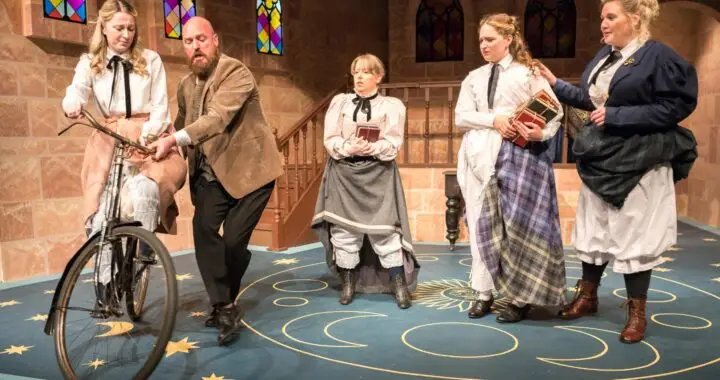
Picture the scene. Cambridge 1896. Four young women wearing ridiculous bloomers under their fashionably long skirts, watching a don riding a bicycle – and then one of them bravely learns to ride for herself. The bicycle symbolises modern freedom, which is what the Girton Girls hope to gain through their studies. Yet even if they complete their academic courses, they will not be permitted to graduate from Cambridge University. Most male students and academics disapprove of their unwomanly thirst for knowledge and apparent rejection of their traditional destinies of marriage and motherhood.
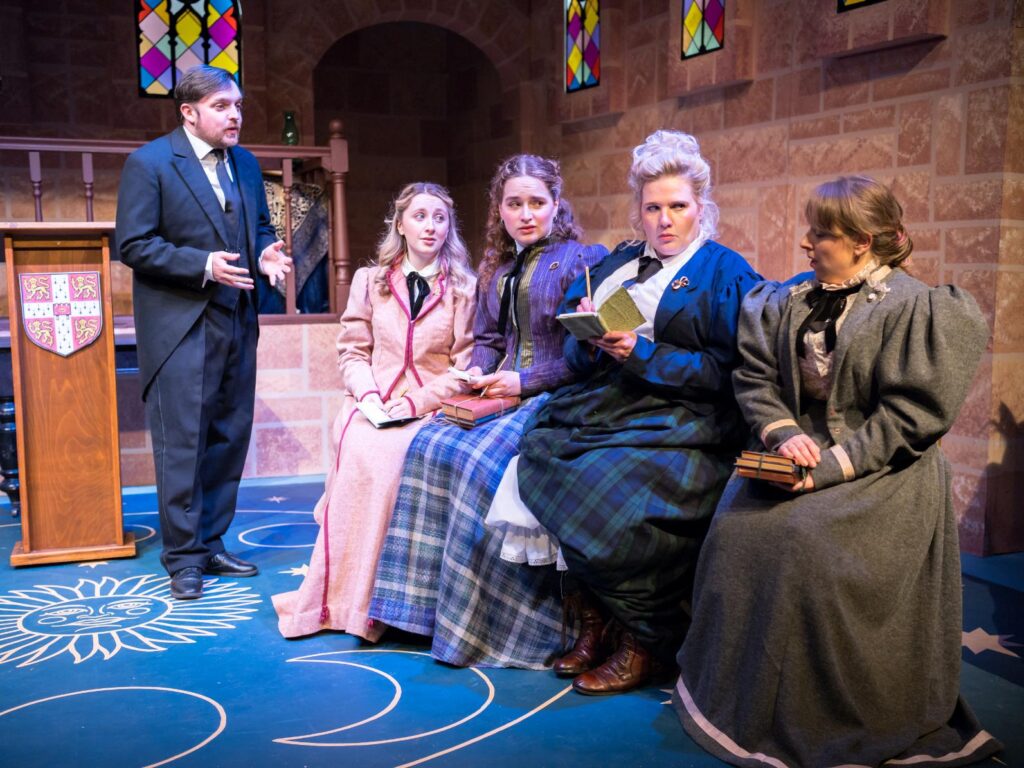
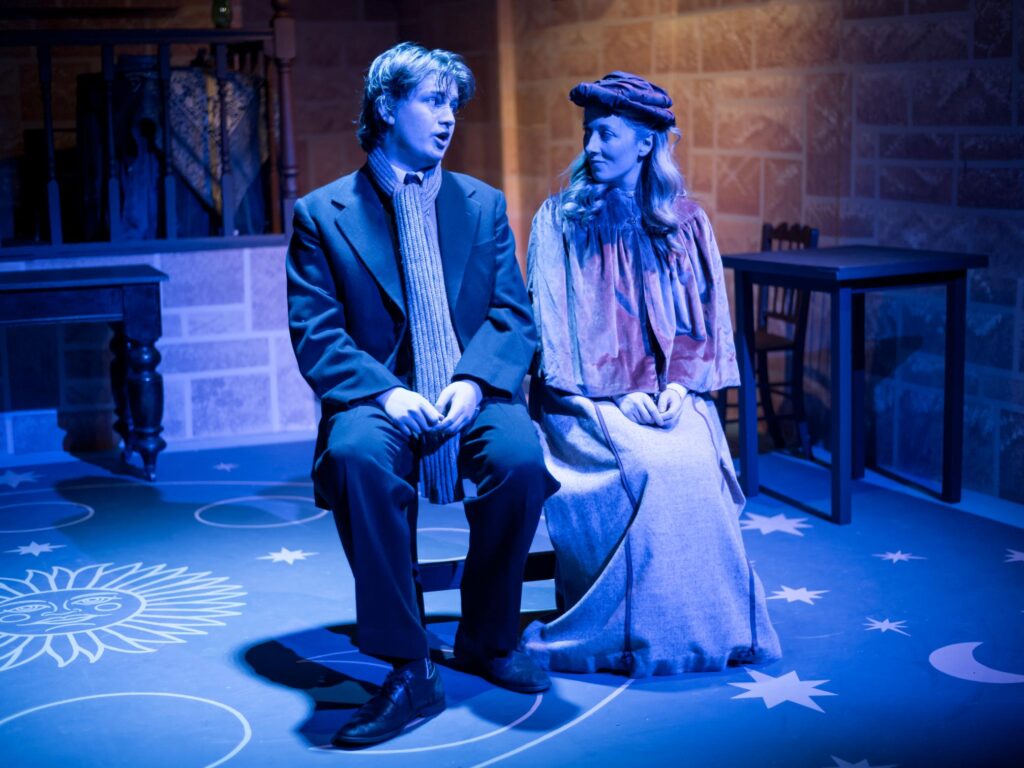
That’s the setting of Jessica Swale’s play Blue Stockings, ably directed by Sue Borg. Mike Rea’s simple but versatile set evokes Gothic university buildings, and the floor is marked out by astronomical symbols, reflecting the scientific studies of the Girls, especially Tess Moffat (Charlotte Cochrane). We see the struggles of Tess, Celia, Carolyn and Maeve throughout one academic year, as they study, fall in love, travel and learn about the developing women’s suffrage movement. The four girls are mirrored by five male undergraduates, some more sympathetic than others. One particularly striking early scene takes place in a lecture theatre where the eminent physician Dr. Maudsley (Andrew Wilson) claims that women’s anatomy and tendency to hysteria makes them ineligible for education. Both male and female students are present, and their varied reactions foreshadow the difficulties the Girls will face in their university careers.
The Girls are not a homogeneous group, and their differences are well brought out. Tess is brave (she challenges Dr Maudsley to his face) but also susceptible to love. Charlotte Cochrane moves convincingly between academic earnestness and tender emotions. Celia Willbond (Imogen Turner), described by the playwright as a fragile hard-worker, is serious and studious. The ebullient Carolyn Addison (Natalie Slater), born into a wealthy and widely travelled family, jollies her classmates along, invites them to Paris for Christmas and makes the audience believe that she will easily fulfil her desire to be a doctor. The fourth Girl, the shy scholarship student Maeve Sullivan (Linzi Wicks) is shy but determined, and clearly very bright. We feel great sympathy for her when her brother Billy (Duncan Ross) forces her to come home after their mother dies and leaves him with younger siblings to bring up.
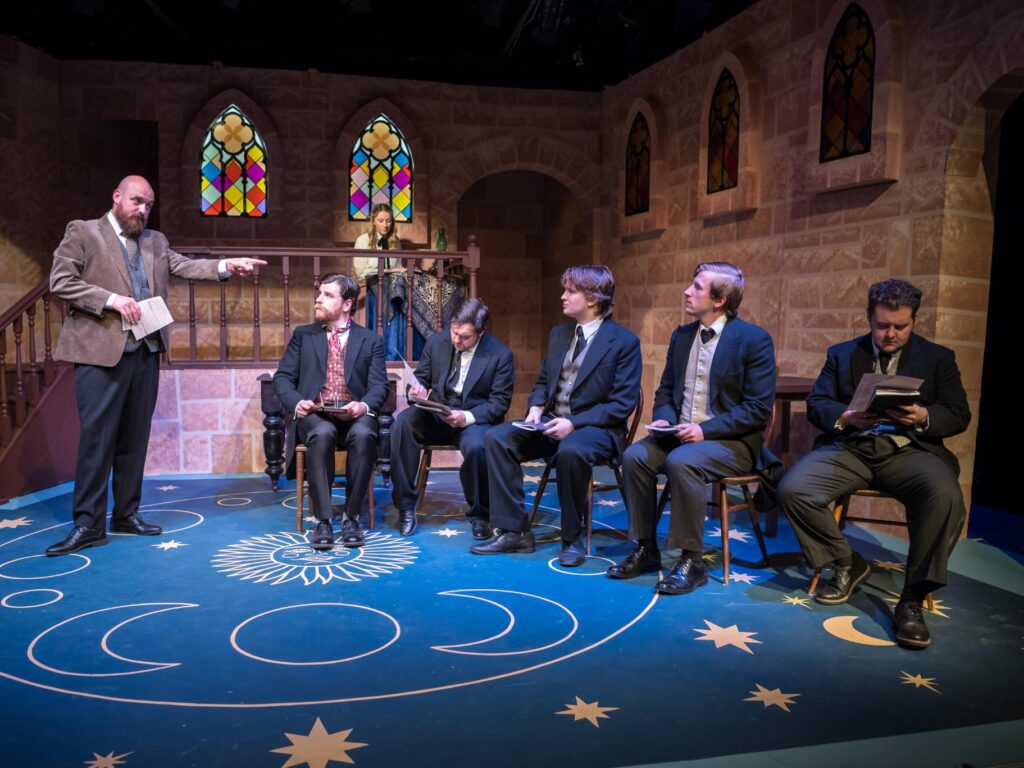
The male students are also varied. Lloyd (Hugh Hamill) is what used to be called a male chauvinist pig. He is involved in the anti-female violence that erupts in Act Two. Ralph Mayhew (Jack Plowright) has a romantic interest in Tess, and absurdly reads her a love poem in Italian, which neither of them understands. The characters of Homes (James Riley) and Edwards (Cameron Kennedy) are less strongly defined, while Will Bennett (Jake Scott) is a family friend of Tess, and feels responsible for and affectionate towards her. As a result he is something of an outsider among the other male undergraduates.
The academics too are divided on the issue of whether women should be eligible for degrees. Mrs Elizabeth Welsh, the head of Girton College, played with dignity and stage presence by Angela Walsh, disagrees with lecturer Miss Blake (Jill Woods) who wants to promote the cause of women’s suffrage in Girton. Both are role-models for the Girls, and it is clear that their academic lives have been a struggle. The male dons are less sympathetic, apart from Mr Banks (Glen Fawcett), who encourages Tess to ride a bicycle and whose tenure is threatened by his support for the academic careers of the young women.
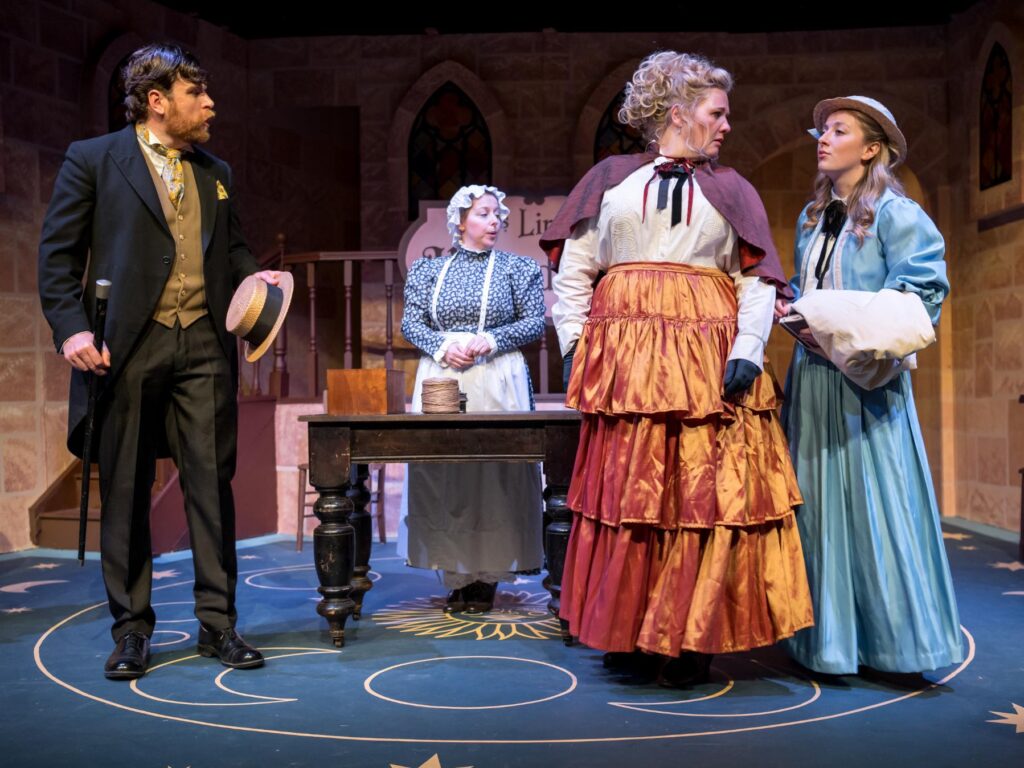
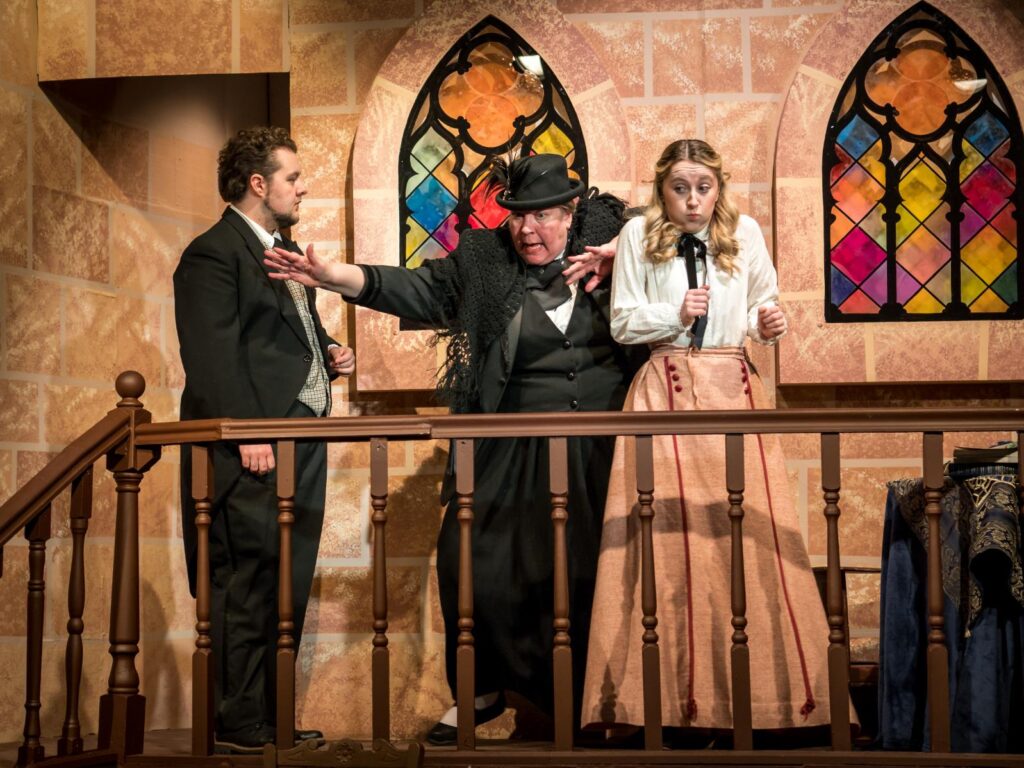
A special mention for the comic relief provided by the formidable Miss Bott (Lisa Kay), who acts as chaperone for the Girls and enforces a strict separation of the sexes.
The evening ends with a powerful rendition of the traditional academic song Gaudeamus Igitur, sung by the entire cast.
All in all, this is a spirited and inspiring evening at the Millgate. Congratulations to all involved.
Helen Rigby